
Magnetic resonance imaging – what is it and when is it performed?

 4 lipiec 2026
 4 lipiec 2026
- What is magnetic resonance imaging (MRI)?
- What role does MRI play in imaging diagnostics?
- Why are the magnetic field and radio waves crucial?
- Which soft tissues are best assessed by MRI?
- When does a doctor refer for an MRI diagnostic test?
- What does the examination with contrast involve?
- What are the limitations of magnetic resonance imaging?
- How does MRI compare to other imaging methods?
- Q&A Section
Do you need a prescription, sick leave, or medical consultation?
Order nowMagnetic resonance imaging is one of the most accurate tests in modern medicine, used to assess soft tissues, internal organs, and the nervous system. This examination plays a key role in the diagnosis of many diseases, as it allows for detailed images to be obtained without the use of ionizing radiation, as confirmed by numerous scientific studies.
- Magnetic resonance imaging is a fundamental tool in modern imaging diagnostics.
- The examination allows for precise assessment of soft tissues and hard-to-reach structures.
- It does not use X-ray radiation.
- The necessity of the examination is always determined by a doctor.
See also: Imaging tests – what are they and what role do they play in modern diagnostics?
What is magnetic resonance imaging (MRI)?
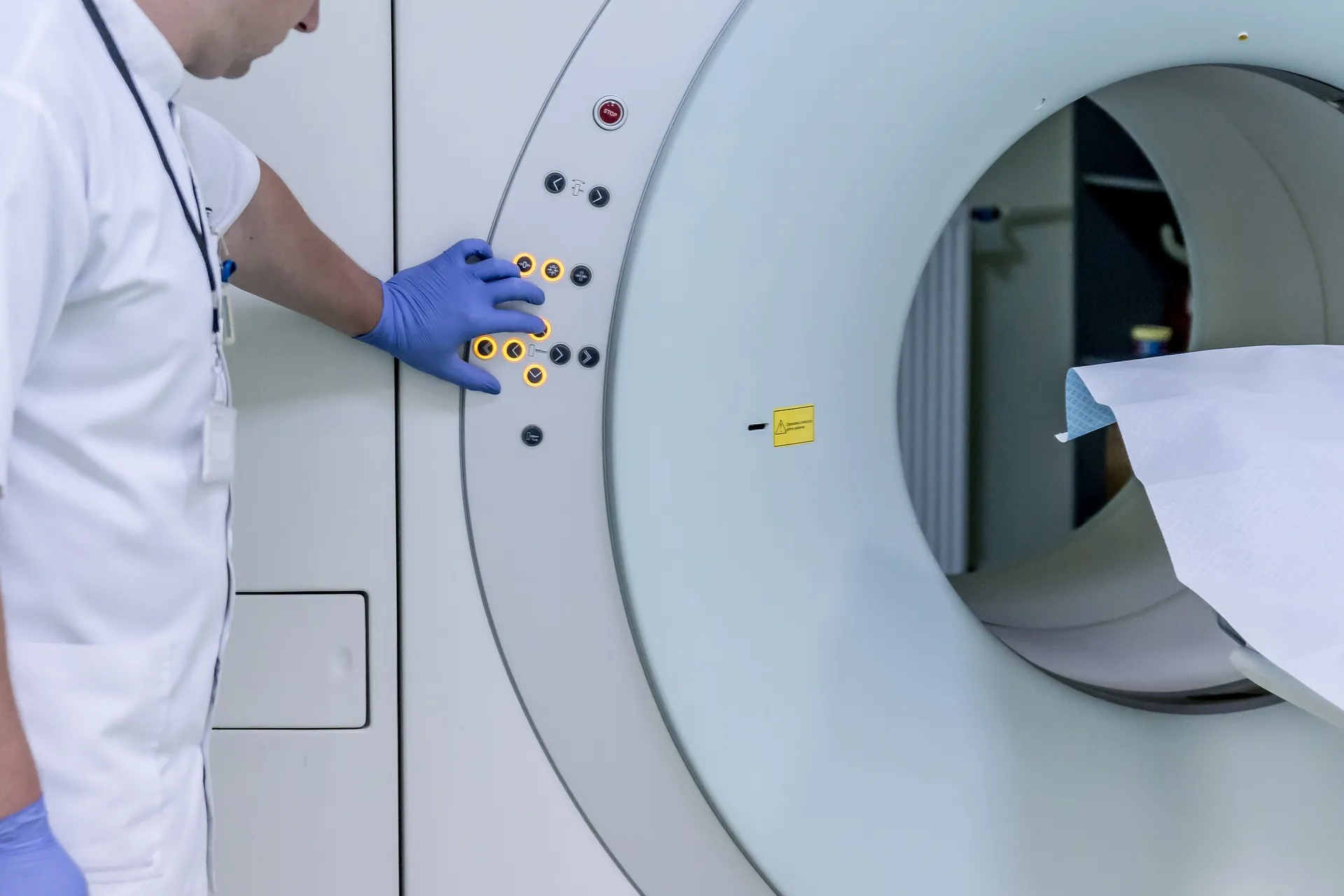
Magnetic resonance imaging (MRI) is a diagnostic test that uses a strong magnetic field and radio waves to create images of the inside of the body. Its operation is based on the properties of hydrogen atoms present in the body’s tissues.
Under the influence of the magnetic field, hydrogen atoms become organized and then emit signals that are recorded by the MRI machine. Physical and clinical studies have shown that the obtained images have very high resolution, especially in the case of soft tissues.
MRI is currently one of the most important tests in the diagnosis of many conditions with a complex clinical picture.
What role does MRI play in imaging diagnostics?
Imaging diagnostics is based on methods that allow for the visualization of anatomical and pathological structures. Magnetic resonance imaging occupies a special place in this field due to its accuracy and wide range of applications.
Comparative studies indicate that MRI surpasses other methods in assessing soft tissues, the nervous system, and joint structures. It enables the detection of inflammatory, neoplastic, and degenerative changes at a very early stage.
The results of MRI often determine further diagnostic and therapeutic procedures.

Why are the magnetic field and radio waves crucial?
The basis of magnetic resonance imaging is a strong magnetic field that interacts with hydrogen atoms in the body. Radio waves stimulate these atoms to emit signals, which are then processed into an image.
Scientific studies confirm that this method is safe, as it does not use ionizing radiation. This allows MRI to be performed multiple times if there are clinical indications.
It is the use of the magnetic field that distinguishes MRI from computed tomography or X-rays.
Which soft tissues are best assessed by MRI?
Magnetic resonance imaging is particularly effective in imaging soft tissues that are poorly visible in other tests. This applies to structures with a high water content.
The most commonly assessed are:
- The brain and spinal cord.
- The spine and joints.
- Internal organs, such as the liver or kidneys.
Clinical studies have shown that MRI is the gold standard in the diagnosis of neurological diseases and orthopedic conditions.
When does a doctor refer for an MRI diagnostic test?
The decision to perform magnetic resonance imaging is always made by a doctor based on the clinical picture and the results of other tests. MRI is usually ordered when a very accurate assessment of anatomical structures is needed.
Indications include, among others, suspicion of tumors, neurological diseases, heart conditions in cardiology, and injuries and degenerative changes in orthopedics. Studies show that the proper use of MRI increases the accuracy of diagnoses and reduces the number of unnecessary procedures.
MRI often constitutes a decisive step in choosing further treatment.
What does the examination with contrast involve?
In some cases, MRI contrast is used, which improves the visibility of specific structures and pathological changes. The contrast is administered intravenously before or during the examination.
Studies indicate that contrast increases the sensitivity of MRI in the diagnosis of tumors, inflammatory conditions, and vascular diseases. Its use is safe for most patients, but always requires prior qualification.
The decision to use contrast belongs to the referring doctor.

What are the limitations of magnetic resonance imaging?
Despite its high diagnostic value, magnetic resonance imaging is not without limitations. One of them is metal implants, which may constitute a contraindication for the examination.
Claustrophobia, or fear of being in the closed space of the machine, can also be a problem. In such cases, an open MRI or other diagnostic methods may be considered.
Studies show that proper patient preparation significantly reduces discomfort associated with the examination.
How does MRI compare to other imaging methods?
Magnetic resonance imaging is often compared to computed tomography, X-rays, and ultrasound. Each of these methods has different applications.
MRI is distinguished by the absence of radiation and excellent assessment of soft tissues. Computed tomography is better suited for acute injuries, while X-rays are used for evaluating bone conditions.bones. Ultrasound, on the other hand, is a dynamic and widely available examination.
Scientific studies emphasize that the choice of method should always be individual and dependent on the clinical problem.
Q&A Section
Is MRI safe?
Yes, because it does not use ionizing radiation.
How long does an MRI take?
Typically between 20 to 60 minutes, depending on the scope of the examination.
Can every patient have an MRI?
No, contraindications may include certain metal implants or severe claustrophobia.
Sources
- Hricak H, et al. Role of MRI in diagnostic imaging. Radiology.
- Smith-Bindman R, et al. Comparative effectiveness of imaging modalities. JAMA.
- European Society of Radiology. Magnetic resonance imaging safety and indications.
