
Osteoporosis – causes, diagnosis, and prevention of fractures

 4 lipiec 2026
Do you need a prescription, sick leave, or medical consultation?
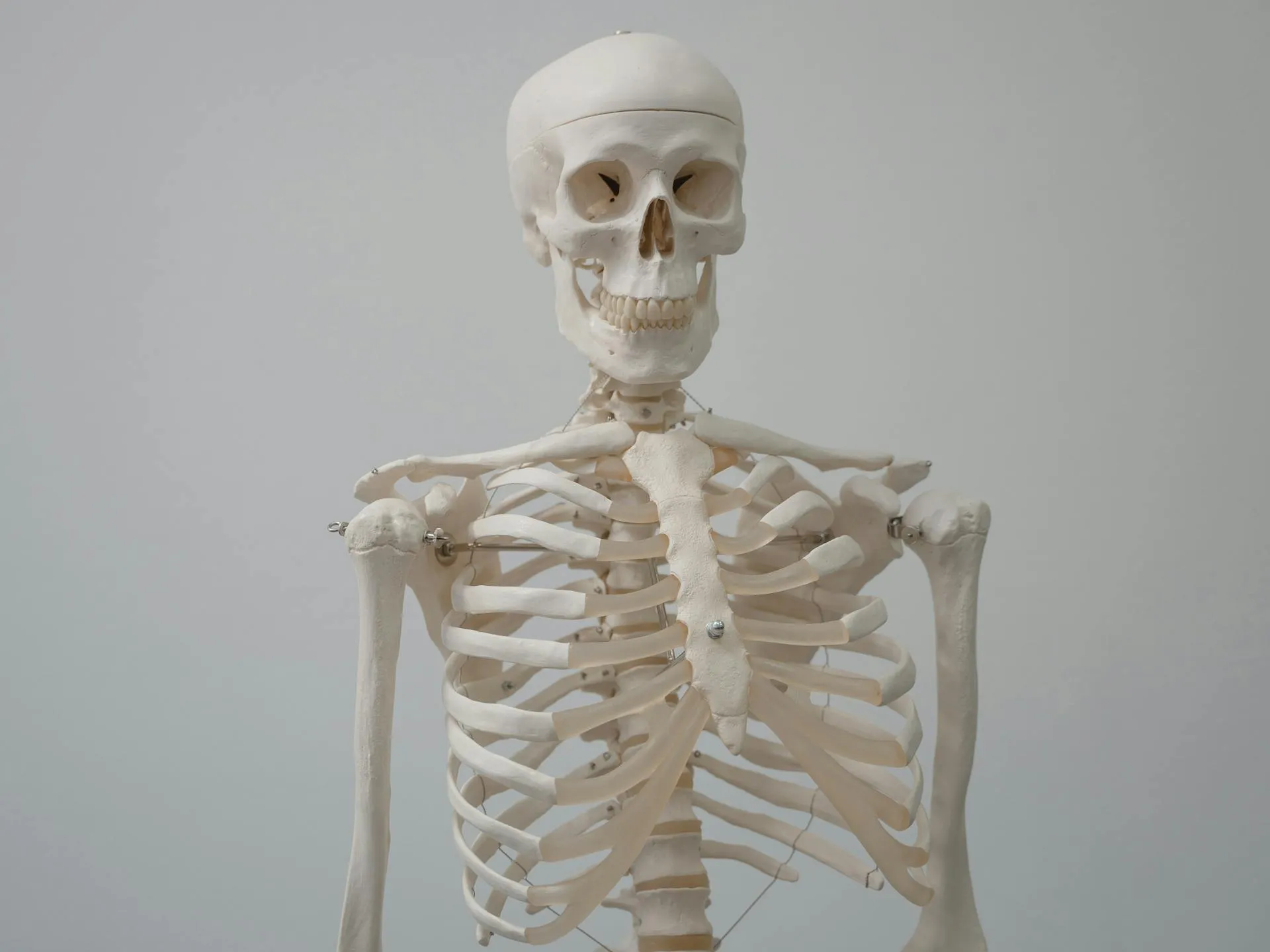
Order nowOsteoporosis is a metabolic bone disease that leads to decreased bone density and an increased risk of fractures. It most commonly develops after menopause due to a drop in estrogen levels, but it also affects older men. Early diagnosis and prevention are crucial.
- The highest risk occurs after menopause and after the age of 50.
- The disease often progresses asymptomatically for a long time.
- The most dangerous fractures are those of the femoral neck and vertebrae.
- Densitometry is the primary diagnostic test.
- Treatment includes supplementation and bisphosphonates.
See also: Muscle Weakness – Neurological, Hormonal, and Metabolic Causes
Do menopause and decreased estrogen levels increase the risk of osteoporosis?
Osteoporosis in women most commonly develops after menopause due to estrogen deficiency.
Estrogens inhibit bone resorption by osteoclasts. Their decrease leads to a predominance of degradation processes over the rebuilding of bone tissue. Bone mass loss is particularly rapid in the first years after menopause.
The risk increases with age over 50, low physical activity, and genetic factors.
What are the most common complications of osteoporosis?
Osteoporosis leads to low-energy fractures that occur even with minor trauma.
The most serious complication is a fracture of the femoral neck, which is associated with high mortality and loss of independence.
A spinal fracture can cause chronic back pain, reduced height, and deformity of posture. A wrist fracture is also common as the first symptom of the disease.
How is osteoporosis diagnosed?
Osteoporosis is diagnosed based on densitometry, which measures bone mineral density (DXA).
The result is presented as a T-score. A value below -2.5 confirms the diagnosis of the disease.
Additionally, risk factors such as smoking, alcohol abuse, and chronic comorbidities are assessed.
What are the methods of treatment and prevention?
Osteoporosis requires pharmacological treatment and lifestyle modifications.
The basis of prevention is an adequate intake of calcium and vitamin D3, which support bone mineralization.
Pharmacological treatment involves bisphosphonates, which inhibit bone resorption and reduce the risk of fractures.
Non-pharmacological measures include:
- Weight-bearing exercises.
- Regular physical activity.
- Quitting smoking.
- Limiting alcohol consumption.
Q&A
Does osteoporosis hurt?
The disease itself usually does not present symptoms; pain occurs only with fractures.
When should densitometry be performed?
In women after menopause and in individuals with risk factors.
Do men suffer from osteoporosis?
Yes, although less frequently than women.
Is supplementation enough?
In advanced disease, pharmacological treatment is necessary.
Sources:
- Kanis JA et al. European guidance for the diagnosis and management of osteoporosis.
- Cosman F et al. Clinician’s Guide to Prevention and Treatment of Osteoporosis.
- Eastell R et al. Management of postmenopausal osteoporosis. Lancet.
- WHO Scientific Group. Assessment of osteoporosis at the primary health care level.
- NICE Guidelines. Osteoporosis: assessing the risk of fragility fracture.
