
Back Pain – Common Causes, Symptoms, and Effective Treatment

 4 lipiec 2026
Do you need a prescription, sick leave, or medical consultation?
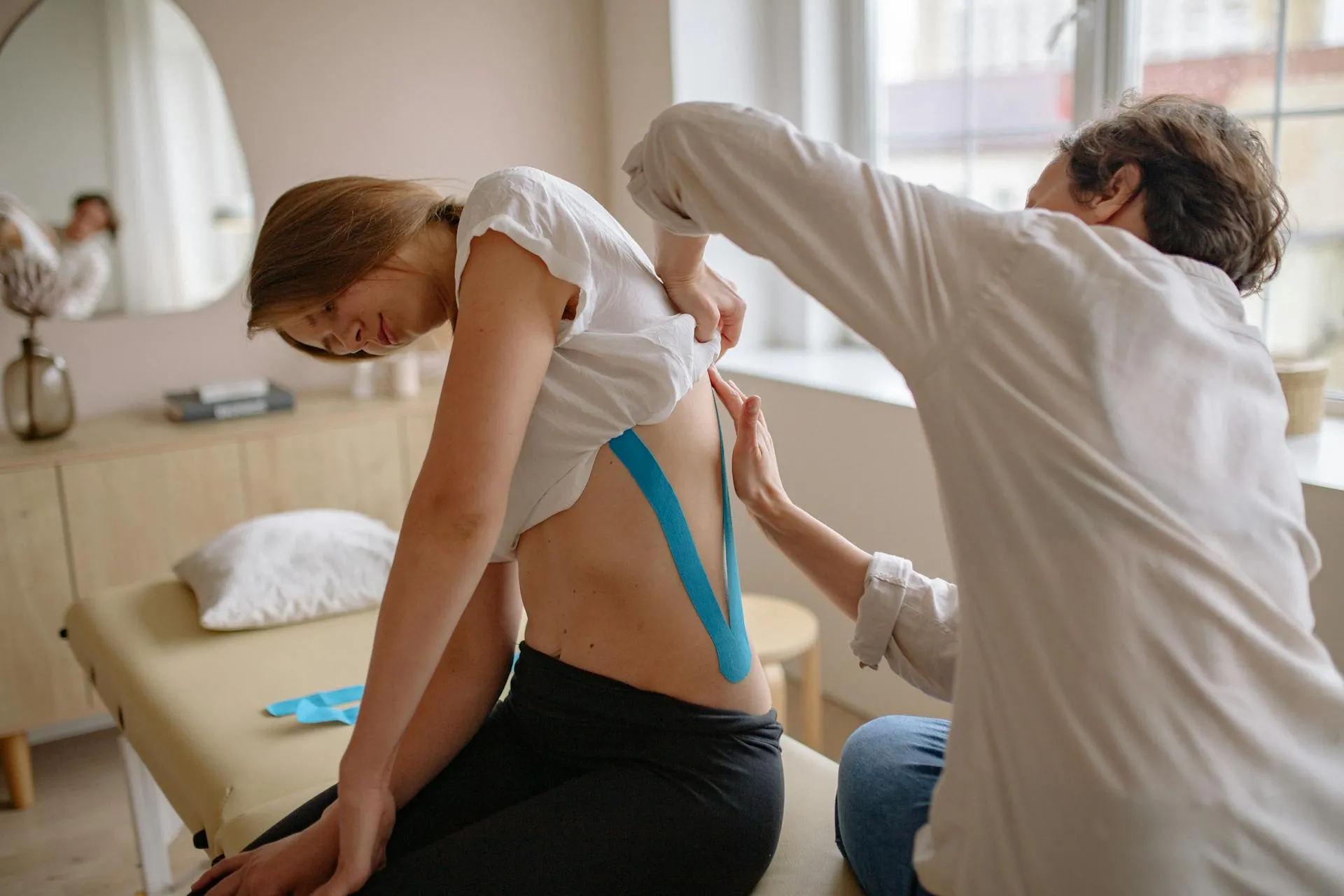
Order nowBack pain is one of the most common musculoskeletal disorders, affecting most adults at least once in their lifetime. It most often results from muscle overload, degenerative changes, or discopathy, but can also be associated with pressure on nerve structures.
- The most common cause is overload and a sedentary lifestyle.
- Discopathy can lead to sciatica.
- Degenerative changes worsen with age.
- Physical therapy is the foundation of conservative treatment.
- NSAIDs are used short-term for acute pain management.
See also: Morning stiffness – when is it a symptom of inflammatory disease, and when is it due to overload?
Are muscle overloads the most common cause of back pain?
Back pain most often results from muscle overload and a prolonged sedentary lifestyle.
Excessive tension in the paravertebral muscles leads to micro-injuries and inflammation of soft tissues. Lack of activity weakens the muscles that stabilize the spine, increasing susceptibility to pain.
Improper work ergonomics and chronic stress further exacerbate muscle tension.
Do discopathy and intervertebral disc herniation cause radiating pain?
Back pain can be a result of discopathy, which is damage to the intervertebral disc.
In the case of intervertebral disc herniation, there is pressure on the spinal nerves, which causes radiating pain to the lower limb – typically in the course of sciatica or femoral nerve pain.
Symptoms may be accompanied by numbness, tingling, and weakness of muscle strength. In such cases, imaging diagnostics are indicated.

Do degenerative changes worsen with age?
Back pain often has its roots in degenerative changes of the spine.
The degenerative process affects the intervertebral discs and facet joints. Reduced elasticity of the structures leads to limited mobility and chronic pain.
The risk increases with age, obesity, and prolonged mechanical overload.
What does treatment and rehabilitation look like?
Back pain is mostly treated conservatively.
The basis of therapy is physical therapy, which includes strengthening and stabilizing exercises. Activities such as swimming or yoga improve flexibility and reduce muscle tension.
In pharmacological treatment, non-steroidal anti-inflammatory drugs (NSAIDs), such as ibuprofen, and paracetamol are used in short-term therapy for acute pain.
Preventive measures include:
- Improving work ergonomics.
- Regular physical activity.
- Maintaining a healthy body weight.
- Avoiding prolonged sitting.
Q&A
Does every back pain require an MRI?
No, in most cases, imaging diagnostics are not necessary at the beginning.
How long can acute pain last?
It usually resolves within a few weeks with conservative treatment.
Is movement safe?
Yes, moderate activity is recommended and speeds up recovery.
When should you see a doctor?
When there is weakness in the limbs, sensory disturbances, or persistent severe pain.
Sources:
- Hartvigsen J et al. What low back pain is and why we need to pay attention. Lancet.
- NICE Guidelines. Low back pain and sciatica in over 16s.
- Maher C et al. Non-specific low back pain. Lancet.
- American College of Physicians Guidelines. Noninvasive treatments for low back pain.
- Chou R et al. Diagnosis and treatment of low back pain. Annals of Internal Medicine.
